
E-invoicing
Issue e-invoices that pass validation the first time
Create tax invoices in Oman's PINT-OM UBL 2.1 format, check them against versioned business and conformance rules before they leave, and keep every issued version frozen — so what you sent is always what you can show.
- PINT-OM, UBL 2.1
- Errors explained before sending
Last reviewed:
What does e-invoicing software for Oman need to do?
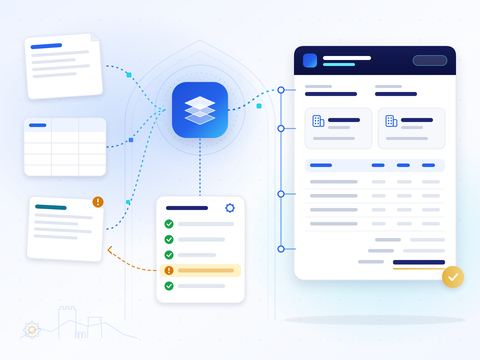
It must produce tax invoices in the approved structured format — PINT-OM, the Oman specification of Peppol International, in UBL 2.1 — validate them before transmission, and support the exchange and reporting model of Oman's programme. Invoice And Tax does this with versioned, deterministic validation, frozen issued versions and linked credit and debit notes.
-
Accredited Service Provider
Invoice And Tax is listed by the Oman Tax Authority's Fawtara portal as an Accredited Service Provider.
View evidence: Accredited Service Provider Verify with issuer(opens external site)
Outcomes
What you get
-
Valid documents by default
Tax invoices are generated in PINT-OM UBL 2.1 from one document composer, whatever the source.
-
Errors caught before sending
Business rules and Schematron conformance checks run first, and every error is explained so it can be fixed.
-
The same result, every time
Validation is deterministic and versioned: the same input gives the same result, and you can see which rule set applied.
-
Issued means frozen
Each issued version is a snapshot. Changes go through credit or debit notes, never by editing history.
-
Arabic and English
Prepare and review documents in either language, with right-to-left layouts.
-
Status you can follow
Track each document from draft through validation and issue in one place.
How it works
Validation before transmission
Every document — from the API, a connector, a spreadsheet or manual entry — passes through the same pipeline. Business rules check the content; conformance rules check the PINT-OM structure. If something fails, you see which rule failed and why, fix it, and run it again. Nothing leaves until it passes.
- Versioned business rules
- Schematron format conformance
- Clear error messages, fix and retry
Workflow
From draft to issued
-
01
Create
Compose the invoice in the platform or send it from your system.
-
02
Validate
Rules run automatically; problems are listed with their cause.
-
03
Issue
The document is issued in PINT-OM and its version frozen.
-
04
Exchange and track
The document is prepared for exchange and reporting under Oman's five-corner model, and its status is tracked.
By role
What it means for each role
-
Finance team
Fewer rejected invoices
Problems are caught and explained before an invoice is sent, not after a customer or the system rejects it.
-
Accountant
A record you can rely on
Issued versions never change, and every correction is a linked credit or debit note.
-
IT
One pipeline for every source
API, connectors and imports all use the same composer and rules — nothing to maintain twice.
E-invoicing questions
When does e-invoicing become mandatory in Oman?
From 1 April 2027 for taxable persons with annual supplies above OMR 5 million, and from 1 October 2027 for all others, under Decision 189/2026. See the Oman e-invoicing guide.
What is PINT-OM?
PINT-OM is the Oman specification of Peppol International (PINT), using the UBL 2.1 syntax. It defines how invoices and credit notes are structured for Oman.
Who has to issue e-invoices?
Decision 189/2026 applies to taxable persons under the VAT Law. The date depends on annual supplies: above OMR 5 million from 1 April 2027, and all others from 1 October 2027.
Can I issue credit and debit notes too?
Yes. Credit and debit notes are issued with controlled reason codes and linked to the original invoice.
What happens if a document fails validation?
It is not issued. You see which rule failed and why, correct the data and validate again.